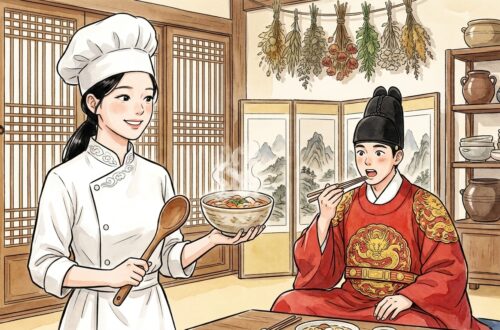
Meta Description: Koreans dump garlic and chili powder into almost everything — except once a year, at Chuseok. Here’s the real, slightly chaotic story behind Korea’s most iconic holiday pancake.

Koreans put garlic and chili powder into almost everything they cook. But twice a year — Chuseok morning and Lunar New Year morning — both quietly disappear from the kitchen.
Here’s the real story behind jeon (전), Korea’s most iconic holiday pancake: a food shaped by strict ritual rules, quiet family tug-of-wars, and a generation quietly renegotiating tradition.
Chuseok 2026 at a Glance
- Chuseok Day: Friday, September 25, 2026 (Lunar August 15th — the harvest full moon)
- Official Holiday: Thursday, September 24 – Saturday, September 26, 2026 — a 3-day statutory holiday, with no substitute day added this year since Chuseok Day doesn’t fall on a Sunday
1. The “No-Garlic” Curse: The One Rule Even the Boldest Cooks Won’t Break
The rule: No garlic, no chili powder — ever, at least for the jeon headed to the memorial table.
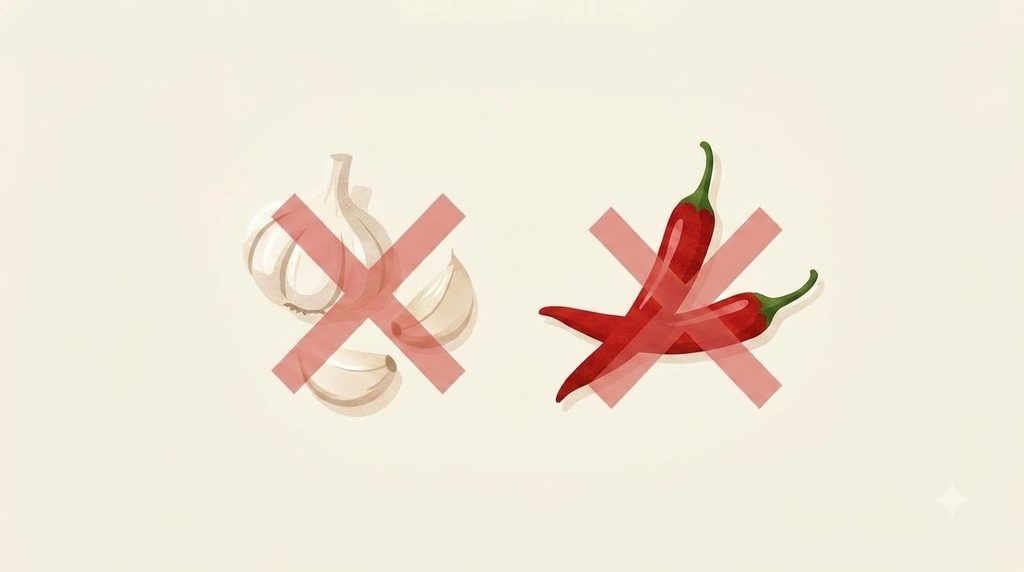
The same household that seasons everything else generously with garlic and gochugaru treats the jeon destined for the ancestral memorial table (charye, 차례) completely differently. For jesa jeon (제사전) — jeon made specifically for the rite, separate from what the family actually eats — the seasoning drops to salt and white pepper only.
Traditional folk belief treats red as a color used to ward off spirits, the same logic behind scattering red bean porridge by the front door to keep bad luck out. On a day meant to welcome ancestors in, red chili powder was considered a real breach of etiquette. Garlic’s sharp smell was avoided for a similar reason — believed by some to be strong enough to chase spirits away rather than draw them near.
But a memorial table with zero color looks a little bare. So cooks lean on a clever workaround: a single thin ring of red chili pepper laid on top as garnish, or a sliver of reddish imitation crab stick (maessal) — just enough color, without breaking the rule underneath.
2. Inside the Living Room Factory: Color Codes and Kitchen Crimes
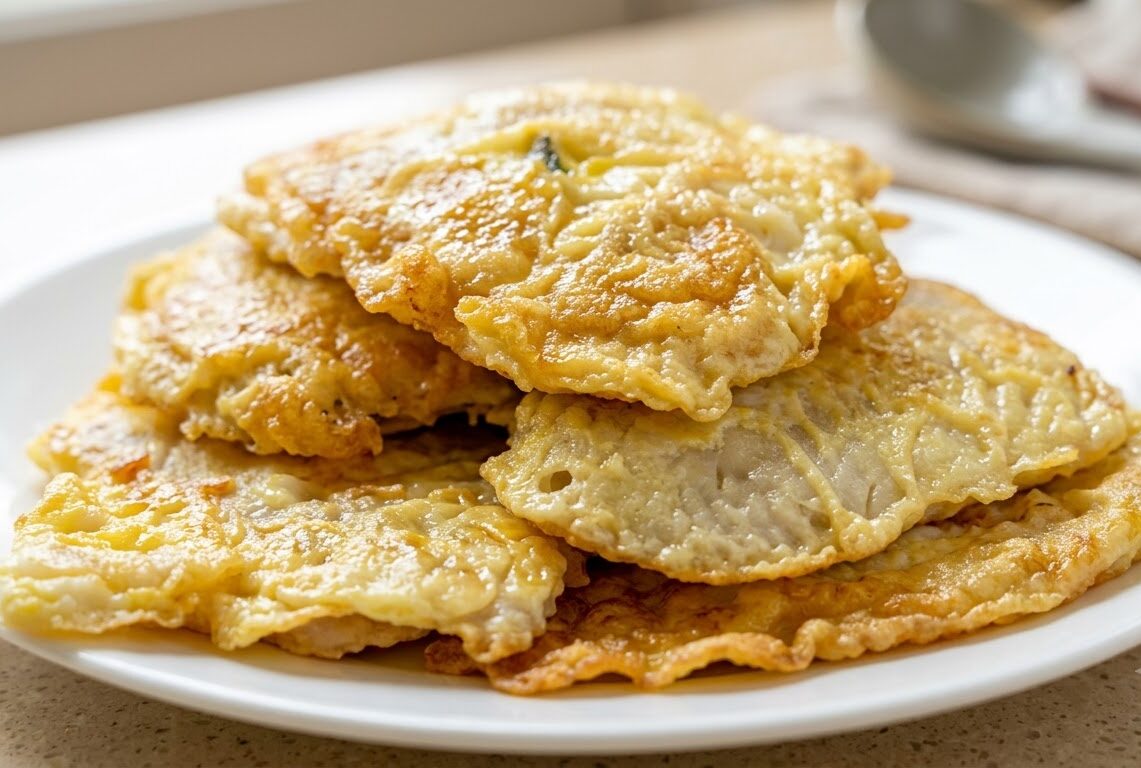
The scene: The kitchen counter is nowhere near big enough to fry the hundreds of jeon a holiday table requires. So the operation moves to the living room floor — roll out a mat, plug in a wide electric griddle, and the living room becomes a temporary factory.
Look closely at a plate of Korean skewered jeon (꼬치전) and you’ll notice something oddly deliberate: pickled radish, imitation crab, scallion, and ham, threaded onto skewers in an almost fixed order. That’s not random plating.
It’s a home cook’s way of echoing Korea’s traditional obangsaek (오방색) — the five directional colors: yellow, blue, white, red, and black — using whatever familiar processed ingredients happen to be on hand. Green scallion needs red ham right next to it “for the color to pop,” and getting the order wrong can earn a gentle scolding mid-assembly line.

And wherever fresh jeon is cooling on a tray, there’s temptation close behind. Freshly fried meat patties (donggeurangttaeng) get set out to cool — and within minutes, a kid or a husband sneaks the crispiest piece straight off the pile.
Cue the mother mid-fry, swatting the hand away with her spatula: “That’s going on the memorial table first — don’t touch it!” A small, cheerful tug-of-war that plays out in kitchens all over Korea.
3. The Quiet Rebellion and the Mother-in-Law’s Radar: A Holiday in Transition
The old story: Older K-dramas love showing daughters-in-law crowded into the in-laws’ kitchen, quietly crying while frying jeon all day long.
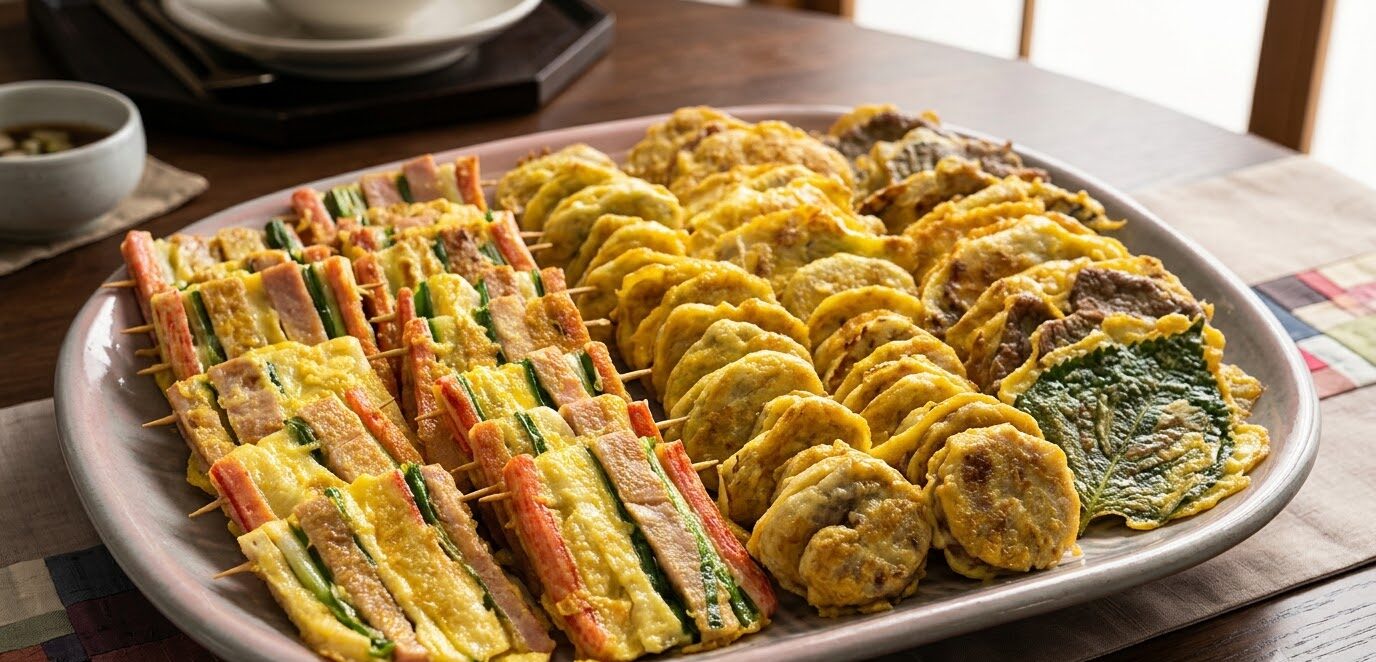
The new reality: Charye rites bound by strict formality are being simplified — or replaced entirely by a simpler family meal — in a growing number of households. Rather than spending the whole day breathing in frying oil, it’s increasingly common to buy frozen jeon from the supermarket and just re-coat it in egg wash before pan-frying, or pick some up ready-made from a jeon specialist at the local market.

In dramas, the tension is still played for laughs: a mother-in-law eyeing a suspiciously perfect piece of jeon, asking detective-style, “Did you buy this, or did you actually make it?”
In real life, though, plenty of mothers-in-law have become the ones suggesting the shortcut first — “Don’t bother frying at home, let’s just buy some at the market — theirs comes out better anyway.”
4. The 48-Hour Aftermath: How Leftover Jeon Becomes Jeon-Jjigae
The problem: By day two or three of the holiday, nobody wants to look at another piece of fresh-fried jeon. The smell of frying oil has soaked into the whole house, and everyone’s had more than enough.
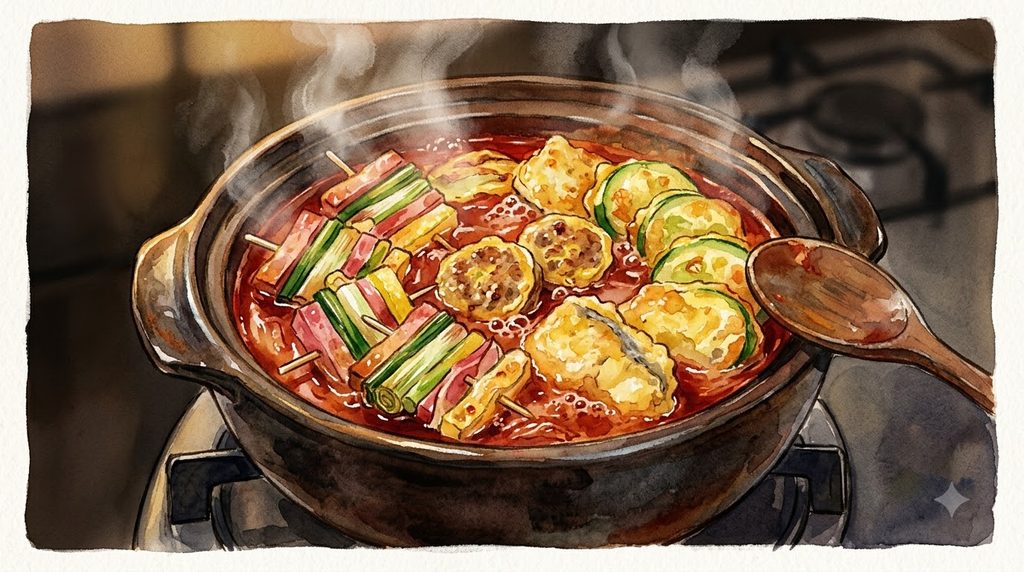
Reheating cold, leftover jeon on its own just brings out more oil and less flavor. So instead, Koreans arrange the leftovers — pollock jeon (dongtae-jeon), skewered jeon, meat patties, all of it — in a circle at the bottom of a pot.
In goes a spicy broth of aged kimchi, chili powder, and anchovy stock, simmered down into jeon-jjigae (전찌개). The savory oil from the egg batter adds richness to the broth, while the sour, spicy kick of the kimchi cuts straight through days of accumulated greasiness.
It’s less a recipe than a coping mechanism — and a genuinely beloved comfort food that marks the true, official end of the holiday.
The Missing Piece: Chogan-jang, Jeon’s Essential Dipping Sauce
The pairing: No plate of jeon is complete without its dipping sauce — and it’s not ketchup or a Western-style barbecue glaze.
It’s chogan-jang (초간장): soy sauce, vinegar, and a few slices of raw onion, often with a slice of cheongyang chili for a spicy kick. The vinegar’s acidity and the crunch of raw onion cut straight through the oiliness of freshly fried jeon — exactly why it’s served alongside almost every plate at the table.
Quick FAQ: Cooking, Reheating, and Eating Jeon
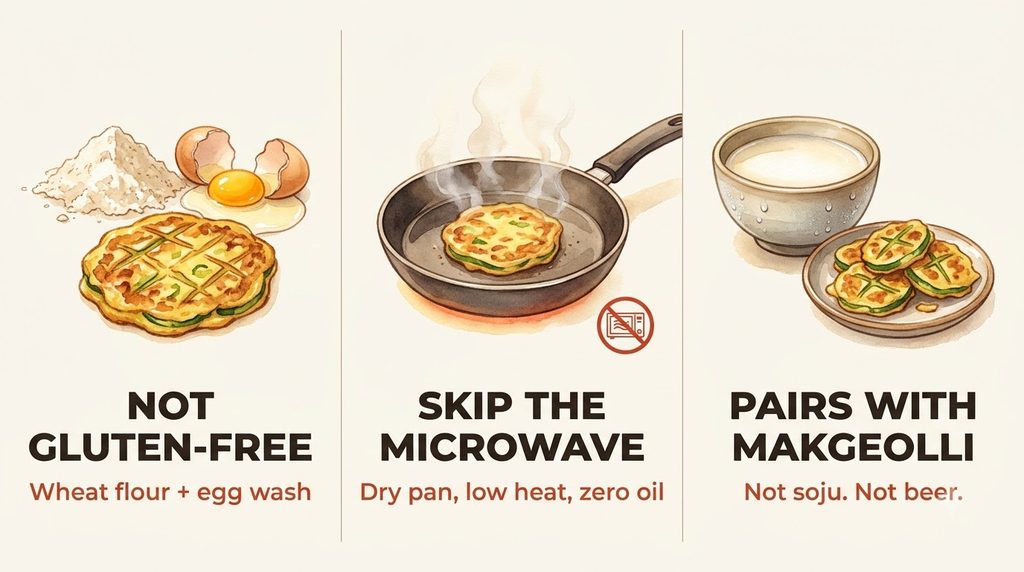
Is jeon gluten-free or vegan? Not by default. Jeon batter is built on wheat flour (milgaru) and egg wash, so even vegetable-based versions like zucchini jeon (hobak-jeon) or shiitake mushroom jeon (pyogo-jeon) aren’t gluten-free or vegan. They are vegetarian, though, as long as no meat or fish is involved.
How do you reheat leftover jeon without making it soggy? Skip the microwave. Reheating cold jeon in a dry pan over medium-low heat, with zero added oil, brings the crispiness back. The microwave just traps steam and makes the coating chewy.
Why is jeon almost always paired with makgeolli? On rainy days and holiday evenings, jeon’s classic drink pairing is makgeolli (막걸리), Korea’s lightly sparkling, unrefined rice wine. Its carbonation and mild tanginess cut through the oiliness of jeon much the same way the dipping sauce does.
Quick Reference: Jeon & Chuseok Vocabulary
- 전 (jeon) — Pan-fried savory pancake
- 제사전 (jesa jeon) — Mild, unspiced jeon made for the ancestral rite table
- 차례 (charye) — Ancestral memorial rite performed on Chuseok morning
- 꼬치전 (kkochi-jeon) — Skewered jeon with alternating colorful strips
- 오방색 (obangsaek) — Korea’s traditional five directional colors
- 동그랑땡 (donggeurangttaeng) — Pan-fried mini meat-and-tofu patties
- 초간장 (chogan-jang) — Vinegar-soy dipping sauce with raw onion and chili
- 전찌개 (jeon-jjigae) — Stew made from leftover holiday pancakes and sour kimchi broth
Read Next
- 📖 7 Korean Words You’ll Hear Constantly Watching “Teach You a Lesson” (참교육)
- 👑 The Real History Behind “Bon Appétit, Your Majesty”
Have you ever caught a “did you buy this or make it?” moment in a K-drama without realizing what was really going on? Tell us in the comments!