Loved “Teach You a Lesson“? Here’s another series worth diving into.
The tyrant king in “Bon Appétit, Your Majesty” is based on a real ruler who shut down Korea’s top royal academy to turn it into his personal party venue.
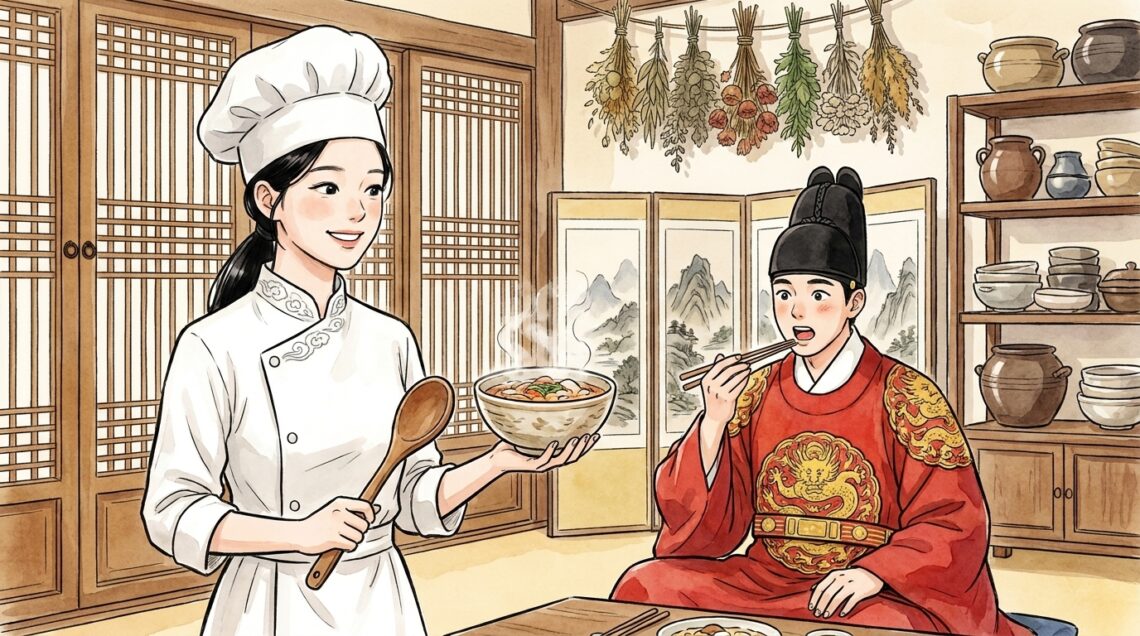
Onscreen, King Lee Heon is picky, dramatic, and occasionally adorable when he’s won over by a good meal. Most viewers watch him as a lovable grump.
Here’s what most international fans miss: he’s loosely modeled on one of the most notorious rulers in Korean history. Once you know that, a few things about the show hit differently.
- The “cute tyrant” is based on Korea’s most infamous king
The show’s King Lee Heon draws inspiration from 연산군 (Yeonsangun), a real Joseon king remembered as one of its worst rulers. The real Yeonsangun shut down the country’s top royal academy to use it as a personal banquet hall, and displaced tens of thousands of people to expand his hunting grounds.
The show keeps things light — his “tyranny” mostly shows up as mood swings over dinner. But the real history behind the character is much darker than the romance genre lets on.
- A female head chef would have been historically impossible
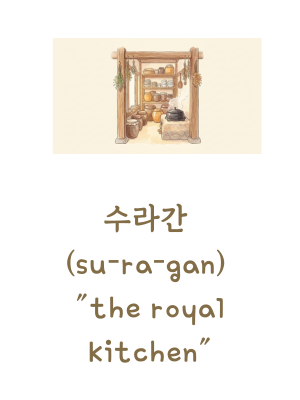
The show’s core fantasy — a woman rising to become the king’s head chef — breaks a real historical rule. According to Joseon’s actual legal code, the royal kitchen (수라간, suragan) was staffed almost entirely by men. The top position, 대령숙수 (daeryeong suksu, “head chef”), was a formal government post held exclusively by male cooks. Women handled side dishes and daily meals, not the king’s main table.
So the show isn’t just historical fiction — it’s deliberately rewriting a rule that was strict enough to make this scenario unthinkable at the time.
- Palace cuisine has a longer — and stranger — history than the show lets on
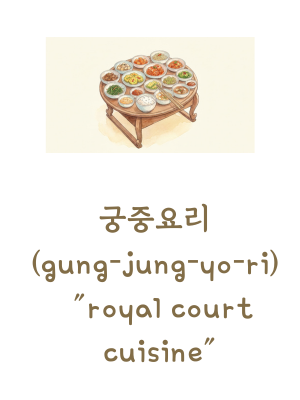
잡채 (japchae), the dish most associated with Korean royal cuisine today, wasn’t even served at the palace until the 17th century — decades after the era this show is set in. And back then, it looked nothing like the version you know: the original was made with shredded pheasant meat and vegetables, no noodles at all. The glass noodles weren’t added until the early 20th century, once sweet potato starch noodles reached Korea from abroad.
So the “royal cuisine” on screen is often a blend of eras — dishes that are real Korean history, just not always from the specific period the show is set in.
Words worth knowing
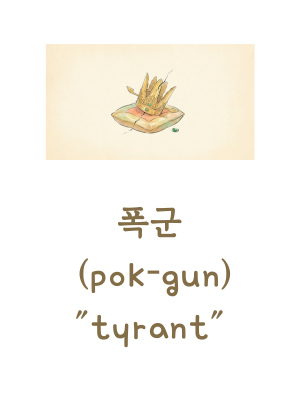
폭군 (pok-gun) → “tyrant”
수라간 (su-ra-gan) → “the royal kitchen”
대령숙수 (dae-ryeong-suk-su) → “the king’s head chef” (historically, always a man)

궁중요리 (gung-jung-yo-ri) → “royal court cuisine”
Did knowing the real history change how you watch the show? Let me know in the comments.