“My husband is very angry right now.”
Said in a flat, calm tone — like she’s reporting the weather.
That’s Inspector Im Han-rim’s most-quoted line from Netflix’s “Teach You a Lesson,”
and it’s exactly why the internet can’t stop repeating it.
The show hit #1 in over 40 countries in its first month.
One fan called it “pure dopamine.”
But here’s what most international viewers miss:
the Korean title itself is doing something a little sneaky.
Quick reference — the 3 lines
- 우리 남편이 지금 화가 아주 많이 났거든요 → “My husband is very angry right now.”
- ___하지 마세요. 우리 애 자존감 떨어지니까요. → “Don’t do ___. It’ll hurt my kid’s self-esteem.”
- 빗금치지 마세요. → “Don’t cross that line.”
The title is an inside joke
“Chamgyoyuk” (참교육) literally means “true education”
— a phrase from Korea’s 1980s–90s democratization movement,
when teachers fighting authoritarian schooling used it to mean humanist, student-first education.
This show flips that meaning on its head.
Online in Korea today, “chamgyoyuk” means
something closer to “they got exactly what was coming to them”
— a well-earned smackdown.
The show picked that second meaning for its title,
and some Korean teachers’ groups actually protested it for that reason,
even while audiences loved it.
It’s an irony that’s basically invisible if you’re only reading English subtitles.
The 3 lines everyone’s quoting
By Episode 3, Inspector Im Han-rim shows up.
She’s become a meme machine.
She never raises her voice. She doesn’t have to.
1. 우리 남편이 지금 화가 아주 많이 났거든요
(uri nampyeon-i jigeum hwa-ga aju manhi nass-geodeunyo)
→ “My husband is very angry right now.”
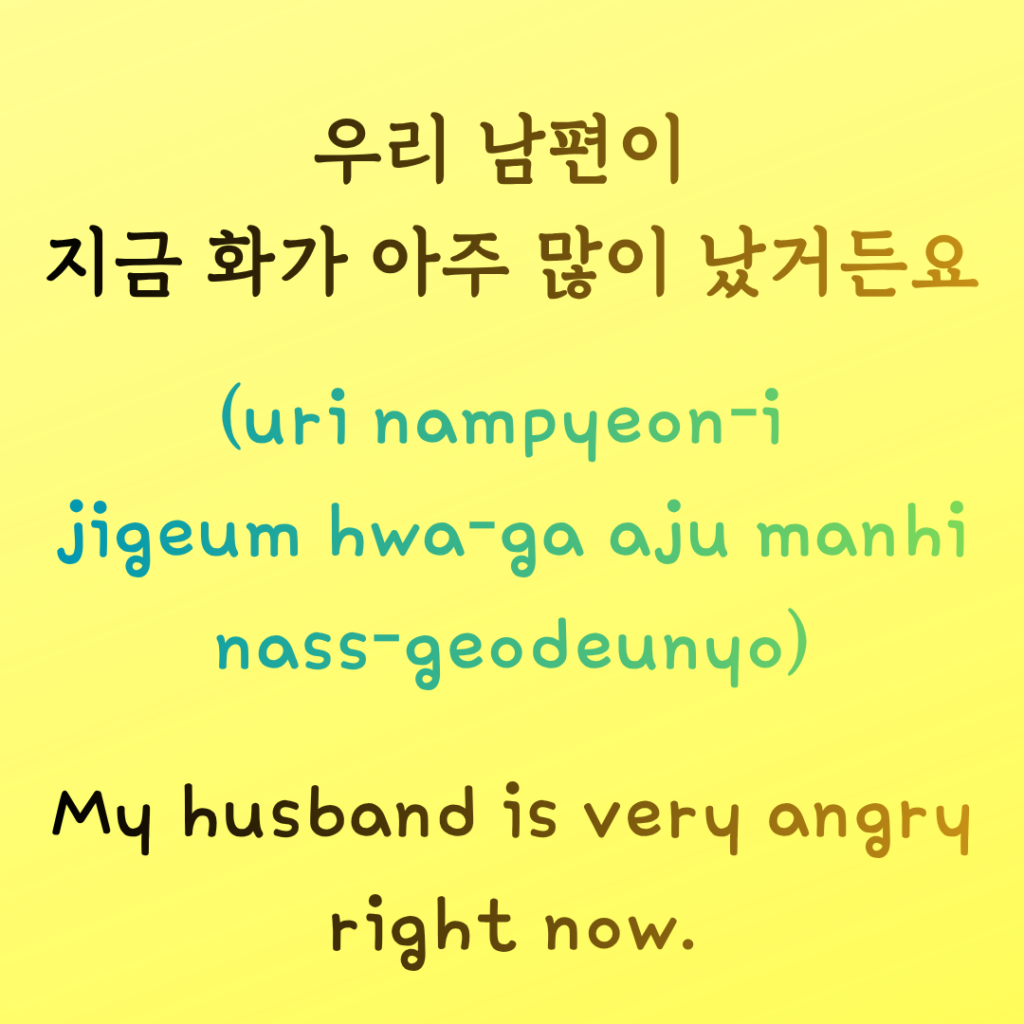
Notice 우리 (uri — “our”), not “my.” Koreans say “our husband,” “our mom,” “our school” even for one person’s thing. It’s not a script quirk. It’s just how the language works.
2. ___하지 마세요. 우리 애 자존감 떨어지니까요.
(___haji maseyo. uri ae jajonggam tteoreojinikkayo.)
→ “Don’t do ___. It’ll hurt my kid’s self-esteem.”

The blank gets a different verb every time — that’s what made it a meme template.
하지 마세요 (haji maseyo) is a polite-but-firm “please don’t.”
Once you clock this pattern, you’ll hear it everywhere.
3. 빗금치지 마세요.
(bitgeumchiji maseyo.)
→ “Don’t cross that line.”
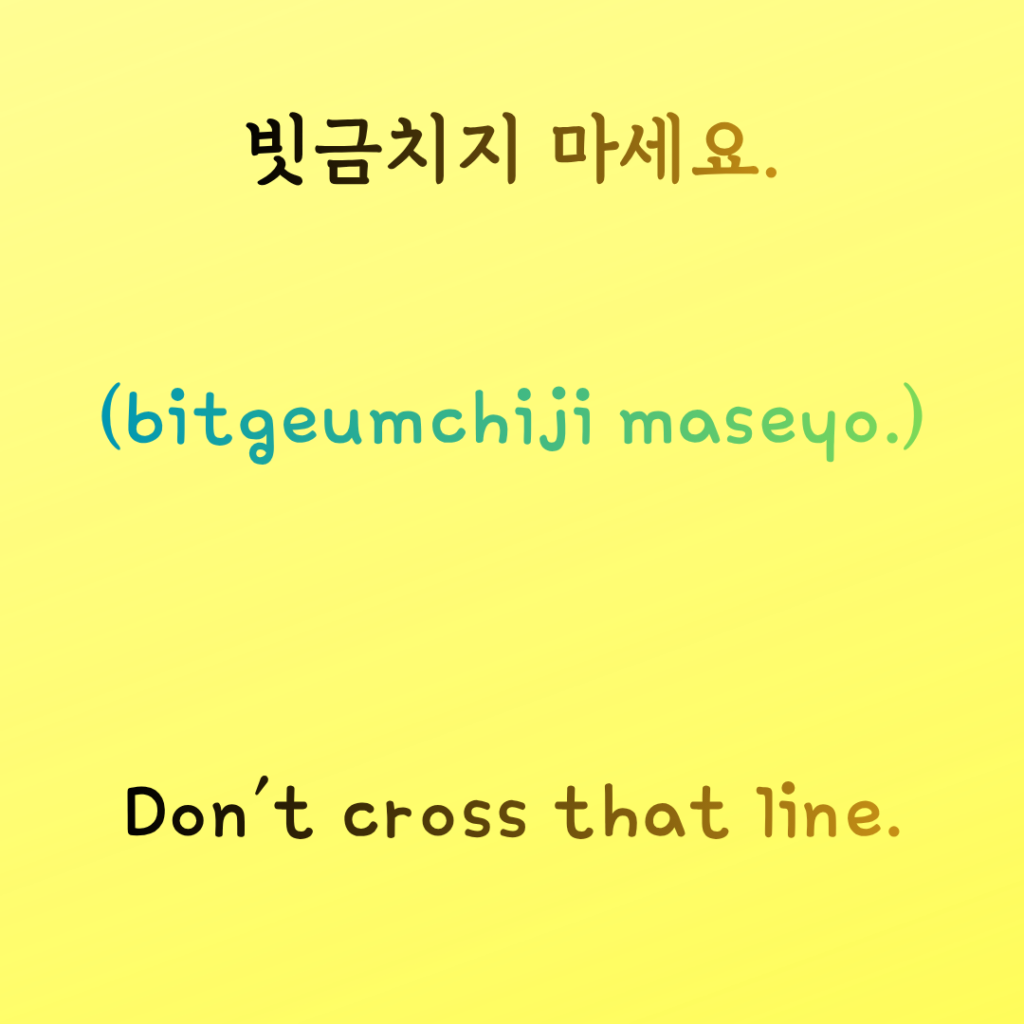
빗금 (bitgeum) means a diagonal slash mark. Short. Sharp. Endlessly repeatable
— which is why it became a catchphrase within days of airing.
Two more things worth knowing
The show also goes by “Get Schooled” in some English-language corners of the internet
— an unofficial nickname almost as common as the real title.
And that 우리 pattern from line #1? It’s everywhere in Korean.
우리 학교 (uri hakgyo, “our school”). 우리 회사 (uri hoesa, “our company”).
우리 엄마 (uri eomma, “our mom”).
Once you notice it here, you’ll hear it in nearly every K-drama after this one.
Why this hits differently outside Korea too
Teachers and parents with zero cultural overlap with Korea say they recognized their own schools on screen. Not an accident — the more specifically Korean the story gets, the more universal it becomes.
Next time you watch, listen for these three lines. Once you catch them once, you’ll catch them every time after — that’s the whole trick to picking up Korean this way.
Which line are you adding to your vocabulary? Tell me in the comments — and let me know which drama you want broken down next.
Test what you just learned